 info@floreslandscapeservicesllc.com
 (302) 513-7951

Summary
At Flores Landscape Services, we install paver patios for homeowners in New Cumberland, Linglestown, Hershey, and surrounding Central Pennsylvania communities. We plan the patio around how the space will be used, how it connects to the house and yard, and what needs to happen below the finished surface so the result feels solid, practical, and complete.
What Our Paver Patio Services Include
A patio is more than an area covered with pavers. Its footprint, elevation, access, transitions, and relationship to the surrounding landscape all affect how comfortable the space is to use and how finished it looks.
Patios Built Around the Way You Use the Yard
Before settling on the patio footprint, we consider what the area needs to accommodate. A smaller space for a table and grill requires a different layout than a larger gathering area with multiple seating zones. Door locations, steps, walking routes, lawn access, and existing landscape features can all shape the plan.
The objective is not simply to install as much hardscape as possible. We want enough usable surface for the intended purpose while preserving sensible circulation and a balanced relationship with the rest of the yard.
Clean Connections to the House and Landscape
Patios often meet several other surfaces within a short distance. The finished paver elevation may need to coordinate with a doorway, steps, lawn, planting beds, retaining features, or a walkway. Those transitions should be considered before installation rather than corrected after the patio is complete.
When the surrounding yard also needs changes, our landscape installation services can help coordinate the patio with grading, planting areas, lawn transitions, and other landscape improvements. When surrounding turf also needs restoration, our sod installation service can help create a clean lawn transition around the completed hardscape.
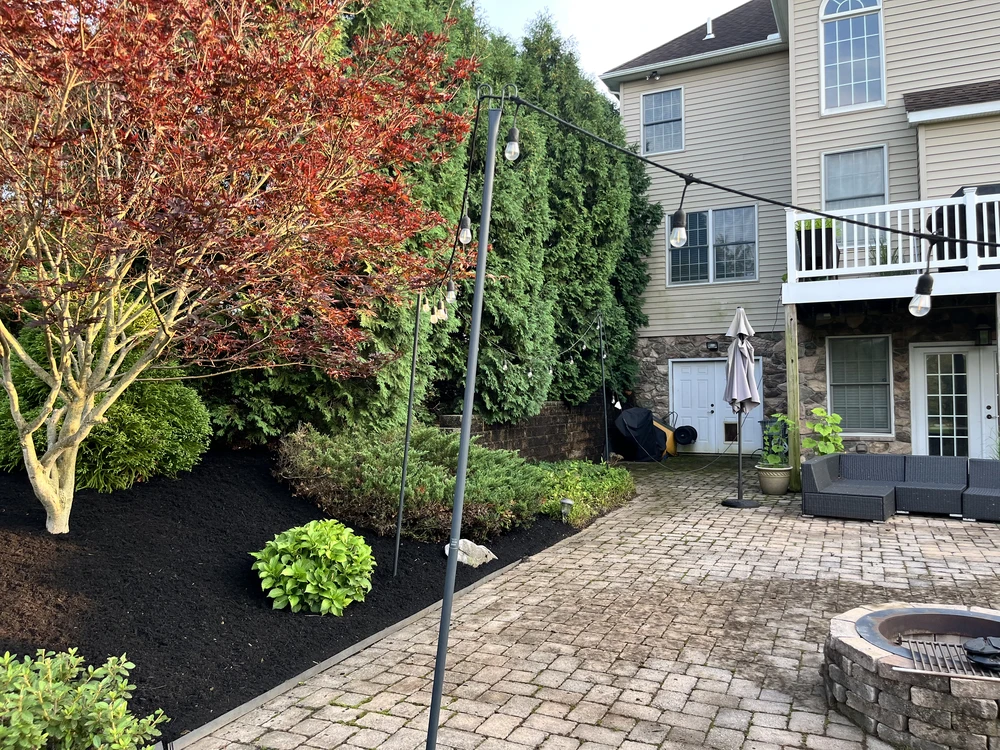
Problems a New Paver Patio Can Help Solve
Some properties already have an outdoor area but lack a comfortable, defined place to gather. Others have a patio or surface that no longer works well with the yard.
Outdoor Areas Without a Defined Place to Gather
Furniture placed directly on uneven lawn can shift, become muddy after rain, and interfere with mowing. A properly planned patio creates a defined surface for dining, grilling, relaxing, and moving between the house and yard.
The patio can also give surrounding landscaping a clearer purpose. Instead of beds, lawn, and furniture competing for the same space, each area can have a defined role.
Existing Patio Areas That Feel Awkward or Incomplete
An older outdoor area may be too small for the way the property is currently used, meet the lawn at an awkward elevation, or leave narrow strips that are difficult to maintain. Poorly placed steps or undefined edges can also make the space feel disconnected from the home.
We look at what is causing the problem before deciding what should change. In some cases, a focused adjustment may be enough. In others, rebuilding the area provides a better opportunity to correct the footprint and transitions together.
Our Paver Patio Installation Process
The visible pavers are one of the final parts of the project. The work underneath and around them determines whether the finished patio begins with a stable, well-planned foundation.
Confirm the Layout and Prepare the Area
We begin by reviewing the proposed patio location, intended use, access, existing elevations, nearby structures, and water movement. We also consider how materials and equipment can reach the work area without unnecessarily disturbing parts of the property that will remain.
After the footprint is established, the area is prepared for the planned patio system. The exact preparation depends on the site and project. We avoid treating every yard as though the same excavation or preparation details automatically apply.
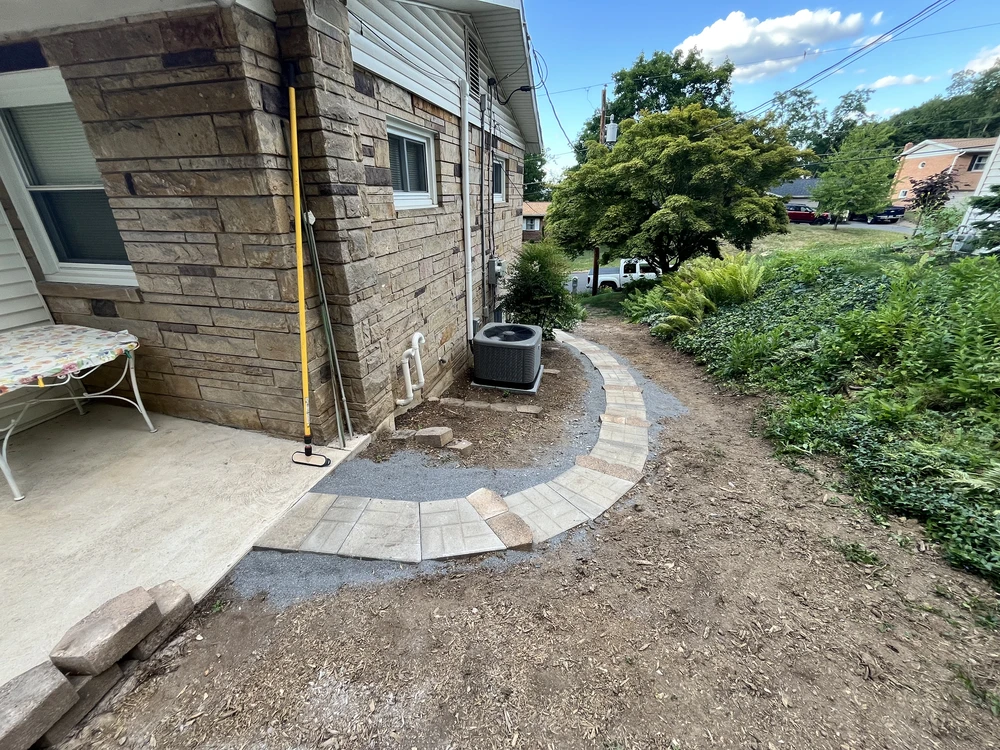
Set the Surface and Finish the Transitions
Once preparation is complete, paver installation moves from the main surface to borders, cuts, edges, and connection points. These finishing areas deserve attention because small inconsistencies are easiest to notice beside steps, walls, lawn edges, and other straight reference points.
We also review how the completed patio meets nearby landscaping and disturbed areas. A clean project should not end at the last paver; the surrounding transitions should make the new surface feel like it belongs on the property.
Important Factors to Consider Before Installing a Paver Patio
The best patio plan balances appearance with practical site conditions. Size, slope, drainage, access, and surrounding landscape features all influence the final scope.
Plan Water Movement Before the Patio Is Finished
A hard surface changes how water moves across part of the property, so the existing grade and nearby runoff sources deserve attention before construction is complete. Roof runoff, downspouts, higher lawn areas, and nearby pavement may all influence the site.
If the property has an existing drainage concern, the patio should not simply conceal it. Significant water issues may need to be addressed before or alongside the project so the finished hardscape does not create a new low spot or interfere with an existing drainage path.
Leave Enough Room for Furniture and Movement
Patio dimensions should reflect the objects and people that will actually occupy the space. Dining chairs need room to move away from the table. Grills need practical placement. Walking routes should not force people around furniture every time they enter the yard.
Thinking through those details early helps prevent a finished patio from feeling undersized even when the square footage seemed adequate on paper.
Why Choose Our Team for Paver Patios
We approach paver patios as part of the property rather than an isolated hardscape rectangle. We consider how the surface will be used, how people will reach it, how it meets the lawn and landscaping, and what preparation is required before the finished pavers go down.
That approach fits the way we handle landscaping services as well: practical improvements, clear priorities, careful transitions, and a finished area that feels connected to the rest of the property.
We provide paver patio installation in New Cumberland and Linglestown, as well as Hershey and other communities throughout our Central Pennsylvania service area.
Conclusion
A paver patio should give the property a defined outdoor living area without creating awkward transitions or unnecessary complications elsewhere in the yard. Whether you are replacing an outdated space or creating a patio where none exists today, contact our team to discuss the layout, site conditions, and scope that make sense for your property.
FAQs
These answers cover common questions homeowners have when they begin planning a paver patio.
