 info@floreslandscapeservicesllc.com
 (302) 513-7951

Summary
At Flores Landscape Services, we provide sod installation for New Cumberland, Linglestown, Hershey, and surrounding Central Pennsylvania communities. We help property owners replace bare, damaged, or disturbed lawn areas with new turf while paying attention to the surface underneath, the surrounding grade, and the edges where the new lawn meets walks, beds, trees, and other parts of the property.
What Our Sod Installation Services Include
Sod creates an immediate green surface, but the installation still has to become an established lawn. We treat preparation, placement, transitions, and early care as connected parts of the project.
Prepare the Surface Before It Disappears Under Sod
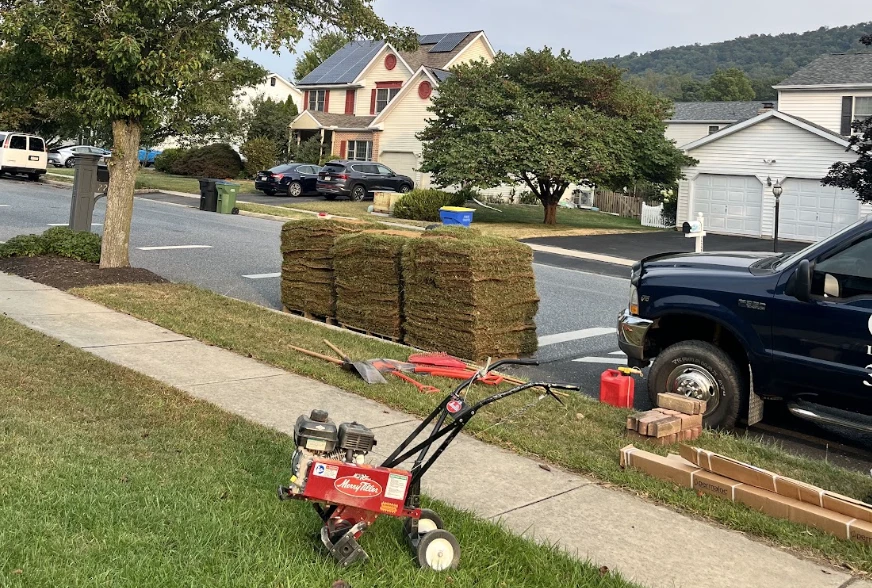
Once sod is installed, problems underneath it become harder to address. Before placement, we look at the existing lawn area, debris, compacted or uneven sections, visible low spots, water movement, and the final height needed beside nearby surfaces.
Preparation depends on the property. The scope may involve removing failed turf or loose material, smoothing the area, correcting surface irregularities, and preparing the soil for close sod-to-soil contact. If the new lawn is part of a larger outdoor project, our landscape installation services can help coordinate turf with beds, planting areas, grading, and other installed features.
Fit New Turf to Walks, Beds, Trees, and Existing Lawn
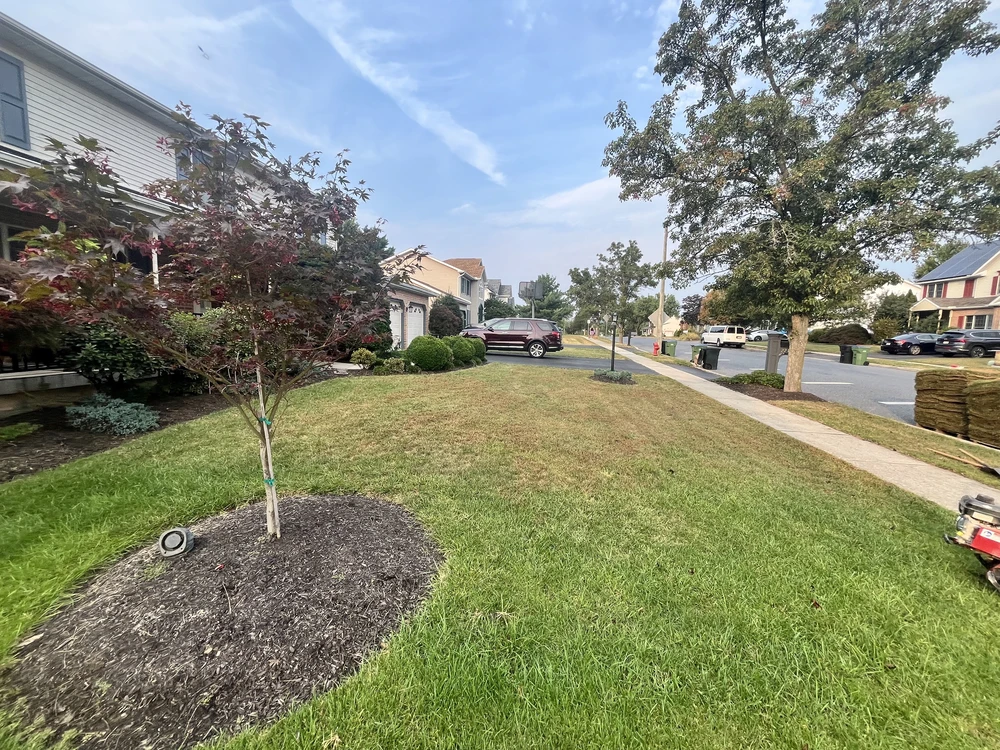
New turf may need to meet a sidewalk, driveway, planting bed, tree ring, patio edge, or section of established grass. Those boundaries affect the finished appearance and how practical the lawn will be to mow.
We plan those transitions to avoid high edges, low strips, or awkward gaps. Careful fitting helps the new area look like part of the property instead of a separate patch of green.
Problems Our Sod Installation Services Help Solve
Sod is most useful when the goal is to restore a lawn surface, not to disguise a problem that still needs correction underneath.
Bare or Damaged Areas That Make the Property Look Unfinished
Thin turf, worn areas, dead sections, and exposed soil can interrupt the appearance of an otherwise maintained property. Sod can provide a fast visual reset when a defined lawn area needs to be restored.
We first consider why the area is struggling. Shade, repeated traffic, compaction, or water movement may still affect the new turf if nothing else changes. When the lawn issue is part of a broader curb-appeal project, our landscaping services can address surrounding beds, edges, and connected outdoor areas as well.
Disturbed Lawn After Landscaping or Property Improvements
Landscape work, drainage corrections, planting projects, and other outdoor improvements can leave soil exposed even when the main project is complete. Sod can restore those disturbed sections and create a finished transition back to the usable lawn.
Timing matters. We do not want newly installed sod repeatedly crossed by later material deliveries or disturbed because another part of the project is unfinished. Coordinating the sequence helps protect the new surface during establishment.
Our Sod Installation Process
A straightforward sod project begins by understanding what is being replaced and what the new lawn needs to meet when the work is complete.
Confirm Grade, Access, and the Area Being Replaced
We review the footprint, access, slope, nearby pavement, beds, mature roots, and visible drainage patterns. We also consider how materials can reach the area and which existing features need protection.
This is when low sections, runoff from nearby surfaces, or unsuitable finished elevations are easiest to identify. The goal is to address practical surface issues before they disappear under new turf.
Place the Sod and Protect the Establishment Period
Once the area is prepared, the sod is fitted across the planned footprint with attention to seams, edges, and nearby surfaces. The new lawn then needs water that reaches through the sod into the soil below and protection from traffic while roots begin establishing.
We explain the immediate care priorities for the completed area. New sod may look finished right away, but treat it as newly installed turf until it has begun rooting into the prepared soil.
Important Factors to Consider Before Sod Installation
The best time to think about watering, drainage, traffic, and future mowing is before installation day. These conditions can influence both the scope and the way the new lawn should be cared for afterward.
Water Movement Can Change the Scope
Sod should not be used to hide a low spot or recurring drainage problem. Downspouts, driveways, sidewalks, slopes, and neighboring grades can send water toward the lawn area. If runoff regularly collects or crosses the planned installation, that condition deserves attention before covering the surface.
Some projects only need normal surface preparation, while more significant drainage or grading concerns may require separate work. Identifying that difference early keeps the sod portion focused on establishing new turf rather than covering an unresolved site problem.
Plan the First Weeks of Lawn Care Before Installation Day
New turf needs consistent moisture while roots begin connecting with the soil underneath, but the lawn should not remain saturated. Weather, sunlight, slope, and soil conditions can change how quickly areas dry, so aftercare should respond to the property rather than one rigid schedule.
Traffic should stay limited while the sod is establishing. Mowing becomes appropriate after the turf is sufficiently rooted and ready to be cut without shifting. Once the lawn is past establishment, our recurring lawn mowing service can provide ongoing care for customers who want consistent turf maintenance.
Why Choose Our Team for Sod Installation
We approach sod as an installation project, not simply a delivery of green material. We pay attention to the area being replaced, surface preparation, nearby features, and the early care that helps the turf begin establishing.
That practical approach fits focused lawn repairs and sod work that completes a larger property improvement. We provide sod installation in New Cumberland and Linglestown, as well as Hershey and other communities throughout Central Pennsylvania.
Conclusion
New sod can quickly change a property's appearance, but a successful project starts before the turf goes down and continues through the establishment period. Contact our team to discuss the lawn area you want to restore and the preparation, installation, and early care that make sense for your property.
FAQs
These answers cover common questions property owners have when deciding whether sod is the right way to restore a lawn area.
